

Testing a high-voltage generator requires more than verifying its power output. Voltage stability, frequency regulation, load response, and long-term operating performance are equally important.
For 10kV generator load testing, two common approaches are available:
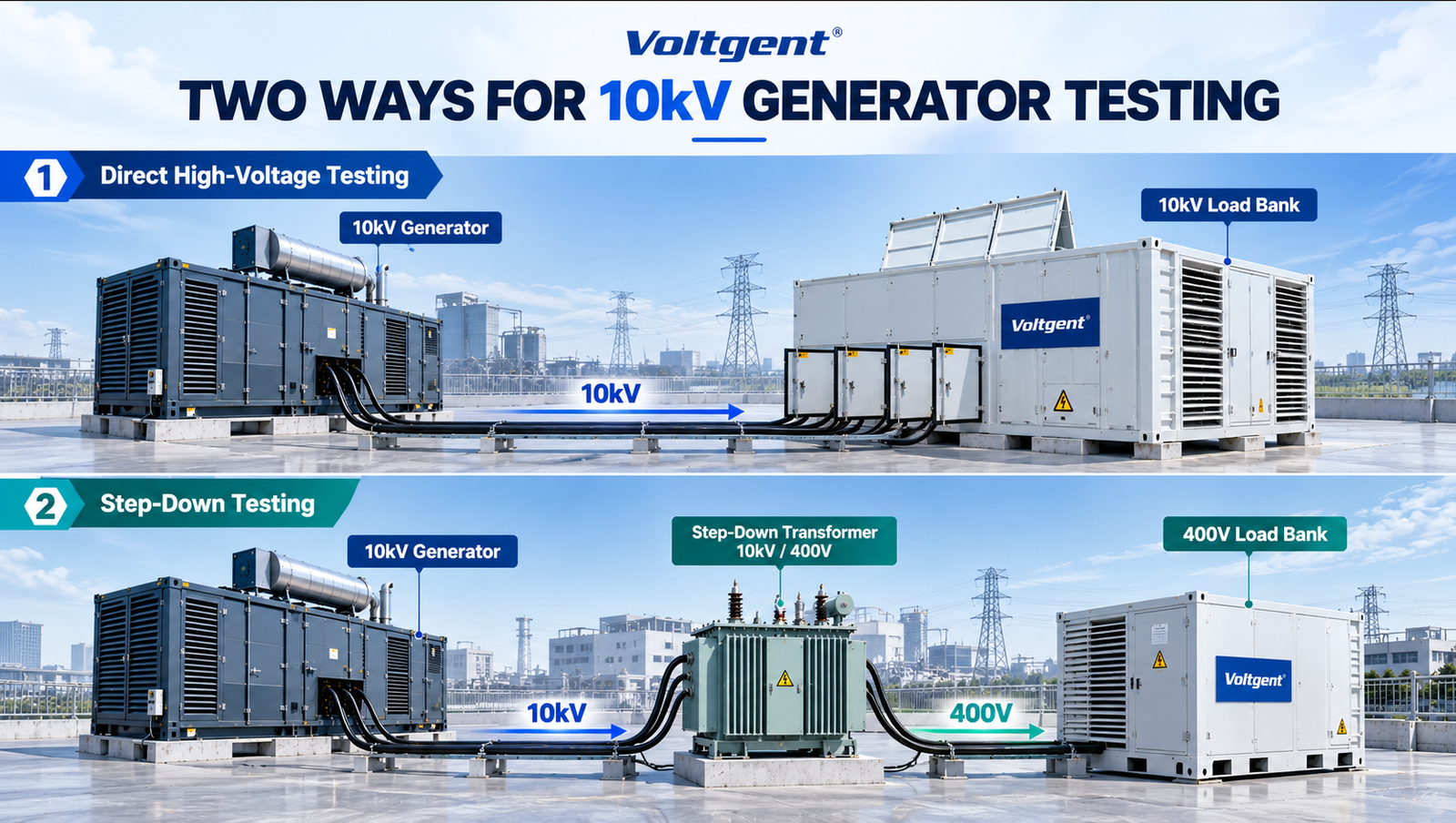
- Direct testing: Connect the generator to a 10kV high voltage load bank.
- Step-down testing: Connect the generator to a low voltage load bank through a step-down transformer.
Both methods can be effective, but they differ in equipment requirements, measurement considerations, cost, and testing flexibility.
For critical applications and comprehensive Factory Acceptance Testing (FAT), a high voltage load bank can provide a more direct testing arrangement by eliminating the intermediate transformer.
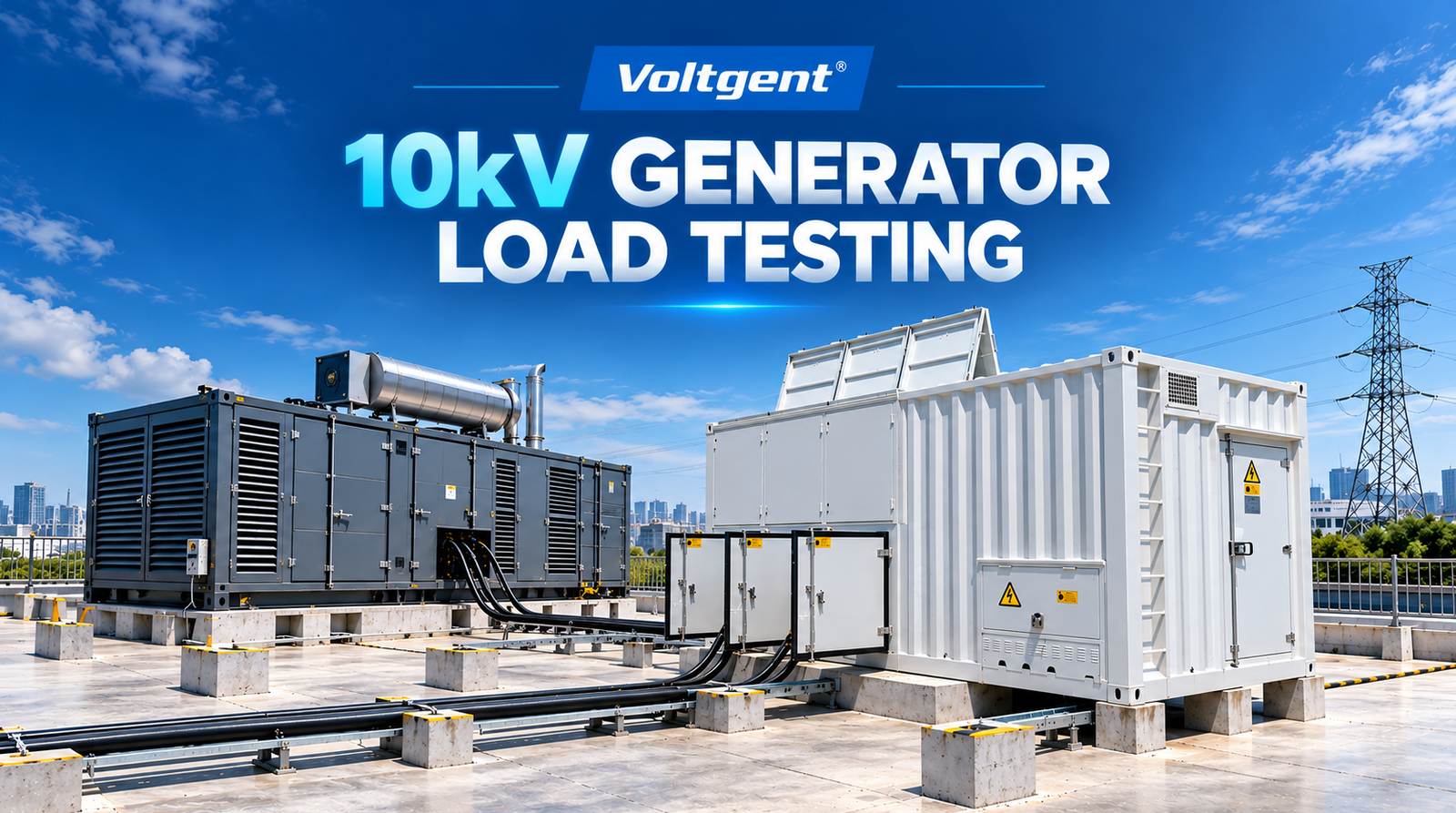
Why Is High Voltage Generator Testing Important?
As power requirements increase in data centers, industrial facilities, offshore platforms, and power generation projects, generators operating at 6.6kV, 10kV, 11kV, and 13.8kV are becoming increasingly relevant.
High voltage generator testing typically evaluates:
- Rated power output and load capacity
- Voltage and frequency stability
- Excitation and voltage regulation response
- Performance under different load conditions
- Long-duration operating stability
- Relevant high voltage protection functions
The choice of load testing equipment can directly affect the test setup, measurement process, and project cost.
Two Methods for 10kV Generator Load Testing
Option 1: Direct Testing with a 10kV High Voltage Load Bank
Test configuration:
10kV Generator → 10kV High Voltage Load Bank
The generator supplies power directly to a load bank designed for the corresponding voltage level.
Key advantages:
| Advantage | Description |
| Direct testing | Tests the generator at its rated output voltage without an intermediate transformer |
| Fewer loss corrections | Eliminates transformer losses from the test circuit |
| Performance verification | Supports testing of generator load response, voltage regulation, and relevant protection functions |
| Simplified power path | Reduces the number of major components in the testing circuit |
Typical applications:
- High voltage diesel generator FAT
- Power plant generator testing
- Large industrial standby power systems
- Critical infrastructure commissioning
Direct high voltage testing is particularly valuable when the project requires a dedicated testing arrangement at the generator’s rated voltage.
Option 2: Testing Through a Step-Down Transformer
Test configuration:
10kV Generator → Step-Down Transformer → 400V Low Voltage Load Bank
In this arrangement, the generator operates at its rated high voltage, while a transformer reduces the voltage supplied to the low voltage load bank.
Key advantages:
- Existing low voltage load banks can be reused.
- Initial investment may be lower when suitable equipment is already available.
- It can be a practical solution for occasional high voltage generator testing.
However, several factors must be considered:
| Consideration | Potential Impact |
| Transformer losses | Copper and core losses affect the power balance |
| Measurement accuracy | Transformer losses and measurement locations must be considered |
| Additional equipment | Requires suitable transformer capacity, connections, and protection |
| Test configuration | Transformer impedance and characteristics can influence system response |
Importantly, step-down testing does not mean the generator itself operates at low voltage. The generator can still operate at its rated 10kV output.
However, the transformer introduces additional characteristics into the test circuit that should be considered when interpreting the results.
Why Choose a Direct High Voltage Load Bank?
For high-capacity generator testing, direct connection offers several practical benefits.
- Fewer Intermediate Losses
When using a transformer, its core losses, winding losses, and magnetizing current affect the overall test circuit.
These factors may require additional measurements or corrections when determining the actual generator output.
A directly connected high voltage load bank removes the intermediate transformer, making the electrical power path more straightforward.
- Direct Testing at Rated Voltage
A high voltage load bank allows the generator to supply the test load directly at its rated voltage.
This supports verification of generator performance, voltage regulation, and load response under the selected test conditions.
However, load bank testing alone does not replace dedicated insulation tests or other required electrical safety tests.
- Reduced Project Commissioning Risk
For power plants, data centers, mining facilities, and other critical applications, identifying performance issues during FAT can help avoid costly problems after installation.
A suitable high voltage load testing arrangement helps engineers verify generator performance before delivery and supports smoother Site Acceptance Testing (SAT).
- Which Testing Method Should You Choose?
The right solution depends on the project requirements, available equipment, and testing frequency.
| Project Requirement | Recommended Approach |
| Dedicated 10kV generator FAT | Direct high voltage load bank |
| Frequent high voltage testing | Direct high voltage load bank |
| Existing low voltage testing equipment | Step-down transformer may be practical |
| Occasional, cost-sensitive testing | Evaluate transformer-based testing |
| Critical project commissioning | Select based on required test coverage and accuracy |
For either approach, engineers should verify the load bank capacity, voltage rating, transformer suitability where applicable, protection coordination, and measurement accuracy.
- Voltgent High Voltage Load Bank Solutions
Voltgent provides customized high voltage load bank solutions for generator manufacturers, power system testing, and industrial applications.
Our solutions can be configured to support:
- Customized voltage levels: 3kV, 6kV, 10kV, and higher voltage classes
- Load types: Resistive, inductive, and combined resistive-inductive configurations
- Testing applications: Generator FAT and on-site SAT
- Measurement and control: Configurable monitoring, data acquisition, and reporting functions
- Power capacity: MW-scale load testing applications
By matching the load bank configuration to the project’s operating voltage and testing requirements, Voltgent helps customers develop practical and reliable generator testing solutions.
Conclusion: Choose the Right Testing Method for Your Project
Both direct high voltage load bank testing and transformer-based low voltage load testing can be used to evaluate high voltage generators.
Direct high voltage load bank testing eliminates intermediate transformer losses and provides a more straightforward testing circuit at the generator’s rated voltage.
Transformer-based testing offers a practical alternative when suitable low voltage load banks are already available.
For critical power applications, the decision should consider not only equipment cost but also testing accuracy, system complexity, safety, and long-term testing requirements.
Looking for a high voltage load bank for your generator testing project?
Contact Voltgent to discuss your voltage level, required load capacity, power factor, and FAT/SAT testing requirements.