

When purchasing a load bank for generator testing, data center commissioning, marine power systems, or UPS testing, the first specification many buyers focus on is power capacity (kW). Bigger often seems better.
However, kW is only one part of the equation.
One of the most common misconceptions is:
“As long as the load bank has enough kW capacity, it can perform any test.”
The reality is quite different.
Even two 1000 kW load banks can deliver completely different testing results depending on their load type.
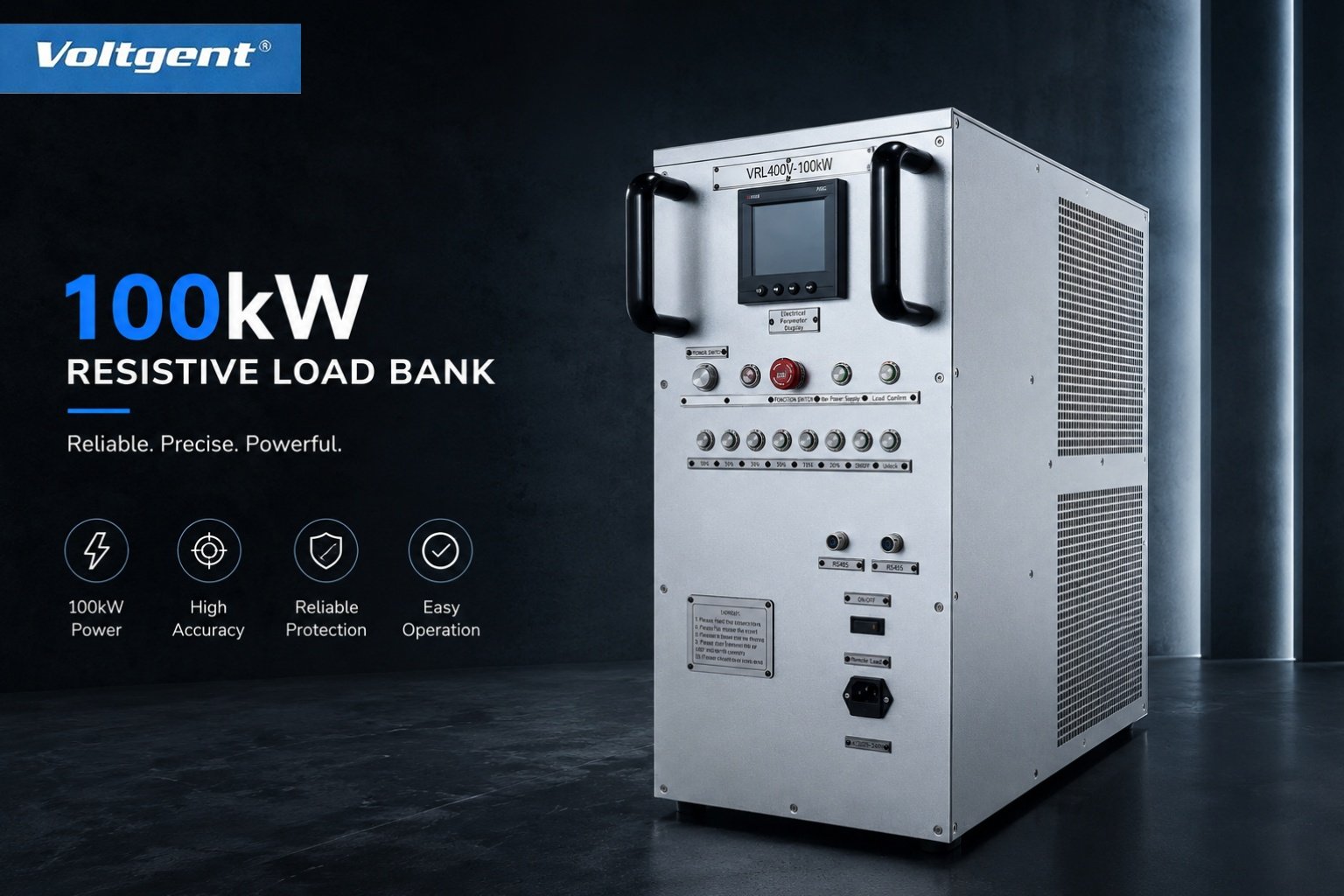
The reason is simple:
A load bank is not defined only by its power rating—it is also classified by the type of electrical load it provides:
- Resistive Load Bank
- Inductive Load Bank
- Capacitive Load Bank
Each type simulates a different real-world electrical environment and is designed for different testing applications.
What Are Resistive, Inductive, and Capacitive Loads?
In simple terms, these three load types represent different electrical characteristics found in real operating environments.
Resistive Load
A resistive load converts electrical energy directly into heat.
Typical examples include:
- Electric heaters
- Heating elements
- Incandescent lamps
- Resistance wire
Key Characteristics
- Consumes active power (kW) only
- Power factor is approximately 1.0
- Simple electrical characteristics
- Lower equipment cost
For generator testing, a resistive load bank is primarily used to verify:
- Engine power output
- Fuel system performance
- Cooling system capability
- Full-load operating performance
This is why resistive load banks are commonly used during Factory Acceptance Testing (FAT) for diesel generators.
Inductive Load
Most industrial electrical equipment behaves as an inductive load.
Typical examples include:
- Electric motors
- Water pumps
- Ventilation fans
- Air compressors
- HVAC systems
Because these devices contain coils, they require reactive power (kVAR) in addition to active power.
Key Characteristics
- Consumes both kW and kVAR
- Typical operating power factor around 0.8 PF
- Closely simulates real industrial operating conditions
Inductive load testing evaluates not only the engine, but also the generator’s electrical performance, including:
- Automatic Voltage Regulator (AVR)
- Excitation system
- Voltage recovery capability
- Dynamic load response
Many generators perform perfectly during resistive load testing but experience:
- Voltage fluctuations
- Frequency drops
- AVR instability
once real motor loads are connected.
These issues can only be identified through inductive load testing.
Capacitive Load
Although less common in generator applications, capacitive loads are critical in certain specialized projects.
They are typically used to simulate:
- UPS systems
- Power electronic equipment
- Certain inverter systems
- Capacitor compensation systems
- Special utility grid conditions
Key Characteristics
- Produces leading reactive power (kVAR)
- Used for specialized testing applications
- Often combined with inductive loads
Typical applications include:
- Electrical laboratories
- UPS manufacturers
- Utility power testing
- Military and defense projects
Resistive vs Inductive vs Capacitive Load Banks
| Comparison | Resistive Load Bank | Inductive Load Bank | Capacitive Load Bank |
| Load Type | Active Power (kW) | Lagging Reactive Power (kVAR) | Leading Reactive Power (kVAR) |
| Typical Power Factor | 1.0 | Typically 0.8 PF | Leading PF |
| Simulated Equipment | Heaters, incandescent lamps | Motors, pumps, fans, compressors, HVAC | UPS systems, inverters, capacitor banks |
| Reactive Power | ✖ | ✔ | ✔ |
| Real Industrial Simulation | ★★☆☆☆ | ★★★★★ | ★★★☆☆ |
| Primary Verification | Engine output capability | Generator performance under inductive loads | Generator performance under leading power factor loads |
| AVR Testing | Limited | Excellent | Excellent |
| Excitation System Testing | Limited | Excellent | Excellent |
| Dynamic Load Response | Basic | Strong | Strong |
| Typical Applications | Most common | Common | Specialized projects |
| Cost | Lower | Medium | Higher |
Simply put:
- Resistive load banks test the engine’s active power output.
- Inductive load banks evaluate the generator’s electrical performance.
- Capacitive load banks are used for specialized power system testing.
Why kW Alone Is Not Enough
Besides power (kW), another critical parameter is Power Factor (PF).
For example:
A generator rated at 1000 kVA with a 0.8 power factor can deliver only:
1000 × 0.8 = 800 kW
Although the generator is rated at 1000 kVA, its actual active power output is only 800 kW.
This is why many testing projects require a load bank capable of providing not only kW, but also kVAR.
That is exactly where inductive load banks become essential.
Why Data Centers Require Resistive-Inductive Load Banks
As AI computing, cloud services, and hyperscale data centers continue to expand, power reliability has become more critical than ever.
A typical data center contains equipment such as:
- UPS systems
- Precision cooling systems
- Chillers
- Ventilation fans
- Water pumps
Most of these are inductive loads.
If testing is performed using only a resistive load bank, the results may appear ideal but fail to represent real operating conditions.
Therefore, many modern data centers specify Resistive-Inductive Load Banks that provide both:
- Active Power (kW)
- Reactive Power (kVAR)
This enables engineers to accurately verify:
- Generator performance
- AVR regulation capability
- UPS compatibility
- Overall power system stability
Why Marine Projects Prefer Resistive-Inductive Load Banks
Marine electrical systems operate large numbers of motor-driven equipment, including:
- Propulsion motors
- Sea water pumps
- Ventilation fans
- Air compressors
Compared with commercial buildings, ships have a much higher proportion of inductive loads.
Many marine classification societies therefore require testing under:
- 0.8 Power Factor
- Full-load operating conditions
- Dynamic load response
A purely resistive load bank cannot accurately simulate these operating conditions.
As a result, Resistive-Inductive Load Banks have become the preferred solution for marine generator testing.
As a professional load bank manufacturer, Voltgent provides complete testing solutions for customers worldwide.
Voltgent load banks support:
✔ Resistive, Inductive, and Capacitive load combinations
✔ Modular expansion for higher capacity
✔ Real-time data acquisition and automated test reporting
✔ Power ranges from 100 kW to multi-megawatt systems
✔ Factory Acceptance Testing (FAT), Site Acceptance Testing (SAT), and on-site maintenance applications
Whether you’re commissioning a data center, testing standby generators, validating marine power systems, or performing preventive maintenance, Voltgent delivers reliable and customized load testing solutions.
Conclusion
When selecting a load bank, kW capacity should never be the only consideration.
The effectiveness of a load test depends on several key factors, including:
- Load type
- Power factor
- Testing objectives
- Real-world application
For data centers, marine vessels, power plants, and other mission-critical facilities, choosing the correct load bank type is often more important than simply choosing a higher power rating.
With extensive engineering experience and reliable product design, Voltgent provides professional, efficient, and customized load bank solutions that help customers achieve more accurate testing, greater system reliability, and full compliance with industry requirements.
Frequently Asked Questions (FAQ)
Q1: Which is better, a resistive or an inductive load bank?
Neither is universally better. A resistive load bank is ideal for basic generator performance testing, while an inductive load bank better simulates real industrial operating conditions and evaluates the generator’s electrical performance.
Q2: Why do data centers require resistive-inductive load banks?
Because data centers contain significant inductive loads such as UPS systems, HVAC equipment, pumps, and fans. A resistive-only load bank cannot accurately simulate real operating conditions.
Q3: What is a resistive-inductive load bank?
A Resistive-Inductive (R-L) Load Bank combines resistive (kW) and inductive (kVAR) loads, allowing engineers to simulate realistic electrical loads with specific power factors, such as 0.8 PF.
Q4: Do marine projects require inductive load testing?
In most cases, yes. Marine generator testing often requires 0.8 power factor testing, full-load operation, and dynamic load response verification, making Resistive-Inductive Load Banks the preferred solution.
Q5: What specifications should I consider besides kW when choosing a load bank?
In addition to kW capacity, you should also evaluate:
- Power Factor (PF)
- Load type (Resistive, Inductive, or Capacitive)
- Voltage and frequency
- Testing application
- Expansion capability
- Data acquisition and reporting functions
Choosing the right combination ensures accurate, repeatable, and standards-compliant load testing.